The Customers Who Don't Mean to Leave
Not every churned customer wanted to churn. Three ways a good customer becomes a "churned" one by accident — and what a good AI dunning module should do about it.
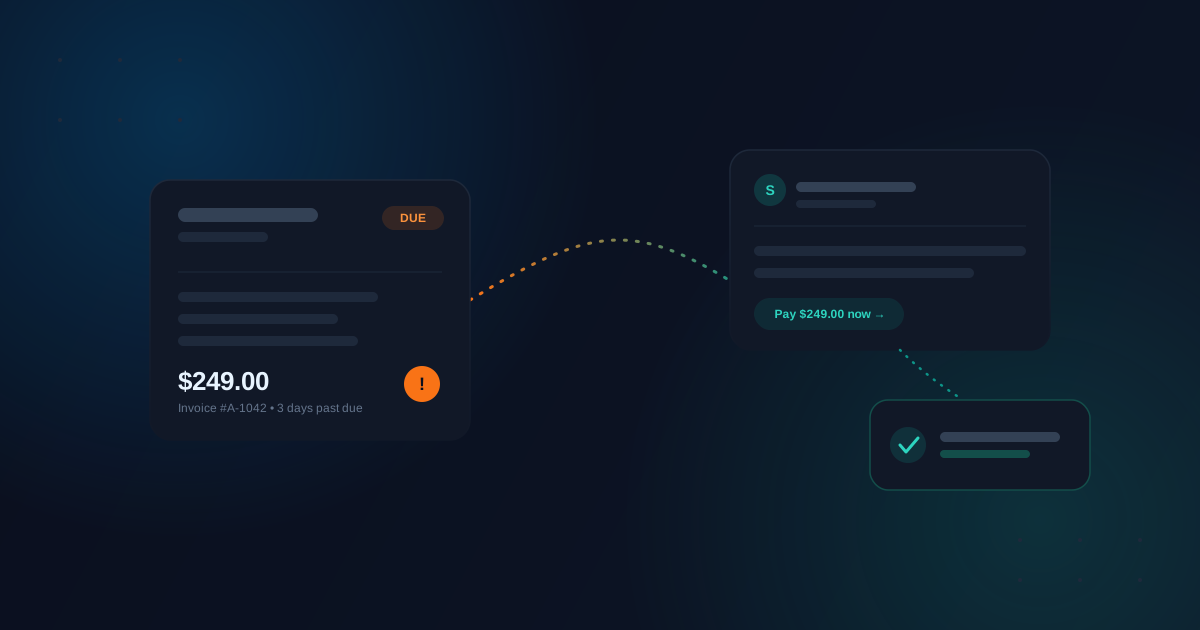
Not every churned customer wanted to churn. Some of them just missed a due date because they were busy running their own business, and by the time anyone noticed, the subscription had already lapsed.
Three ways a good customer becomes a "churned" one by accident
- They didn't know a payment was due. Most subscription businesses assume customers are tracking their own renewal dates. Most customers aren't. A founder juggling ten priorities isn't ignoring an invoice on purpose — they simply never saw it coming, and the charge failed quietly in the background while they were busy running their own company.
- A card expired, and nobody tried again. An expired card is one of the most common reasons a payment fails — and one of the easiest to fix, if the business notices and asks. Left alone, a single failed charge with no follow-up quietly turns into a cancelled subscription, even though the customer never actually decided to leave.
- Postpaid billing turns into a finance headache. On postpaid plans, the pain shows up differently: usage keeps accruing while collection lags behind. A customer can end up with three months of billing generated but only two months actually paid, and by the time finance catches the gap during reconciliation, it's a manual chase instead of a clean number.
None of these are "difficult customers." They're ordinary ones, caught by a billing process that doesn't notice anything is wrong until revenue has already been lost.
What we're building into Subscriply's dunning module
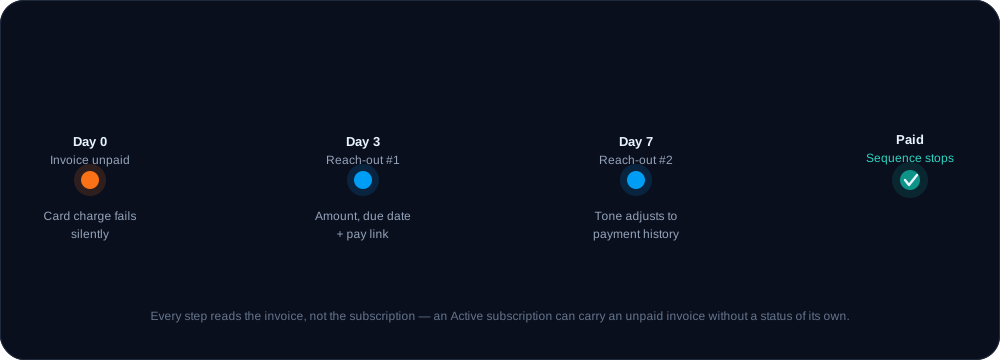
Subscriply keeps the subscription model itself deliberately simple — a subscription is Draft, Pending Activation, Active, or Expired, and nothing more granular. Payment health lives separately, on the invoice: an Active subscription can carry an unpaid invoice without needing a special status of its own. That's exactly what the dunning module reads from — it triggers off invoice-level signals like "unpaid, X days past due" rather than a subscription status, and runs a sequence of reach-outs at configurable intervals from there, instead of a generic fixed calendar. We're building an AI layer on top of that structure to decide, per customer and per billing cycle, what should happen next:
- Every reach-out carries the customer's actual account details — amount due, due date, a direct payment link — instead of a generic "please pay" template that leaves people digging through their own records
- The sequence stops the moment a payment goes through, so nobody keeps getting chased for a problem they've already fixed
- Visibility into postpaid collection cycles at renewal, so a mismatch between billed and paid amounts gets caught during the cycle, not months later in reconciliation
- Reach-outs personalized to where a customer actually is in their billing cycle, so a first-time miss and a pattern of missed payments don't get treated the same way
What this means for merchants running on Subscriply
We didn't set out to build just another metered or seat-based billing platform — Subscriply goes deeper, into customer lifecycle management and retention, and the AI layer inside dunning is where that shows up most directly. For merchants, that means an AI that:
- Drafts each customer's dunning emails based on their subscription status and payment behavior, so a first missed payment doesn't read the same as a fourth one
- Runs conversational outreach — not just fire-and-forget reminders — that works active subscriptions toward clearing an overdue invoice and expired subscriptions toward a win-back, designing a tailored offer or discount when that's what it takes to close the loop
- Surfaces cross-sell opportunities inside those conversations — a relevant add-on or upgrade instead of just chasing a payment — lifting ARPU and improving LTV:CAC per customer
The goal: continuity, not just collections
Done well, a dunning system isn't just chasing money — it's the difference between losing a happy customer to an accident and keeping the relationship intact through one bad billing cycle. The customers who want to stay should never have to notice the system caught a problem on their behalf. The ones who need more attention should be easy for a finance team to spot, instead of surfacing three months later as a reconciliation problem.
That's the bar for the AI-driven dunning and collections layer we're building at Subscriply.
Subscriply is an AI-native subscription billing and management platform built for SaaS businesses across the globe. Want to know more? Write to us at info@subscriply.com.